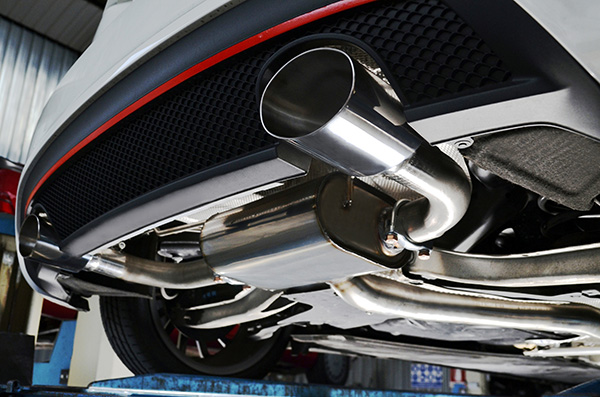
The engine starts without much trouble and idles well enough, but a highway merge takes far more room than it used to. Pressing harder on the accelerator adds noise without the expected pull. A tune-up might seem like the next step, particularly if no obvious exhaust leak can be heard.
Exhaust restriction is one possibility when an engine struggles to move enough air under load. The symptoms overlap with fuel delivery, ignition, and transmission concerns, though. These five changes are reasons to test exhaust flow, not reasons to order a catalytic converter without checking it.
1. The Engine Pulls Briefly, Then Runs Out of Breath
A partially blocked exhaust can pass enough gas for idle and light driving but become a greater obstacle as flow increases. Acceleration may begin reasonably, then flatten during a sustained pull. The driver keeps adding throttle because the engine seems unable to finish the job it started.
A weak fuel supply can produce a similar fade, so the sequence alone won't identify a blockage. Tell the technician whether the car initially responds and then loses its pull, or feels weak immediately. Comparing exhaust pressure with fuel delivery and engine data under the relevant load helps distinguish those conditions.
2. Hills Require More Throttle Without Restoring Speed
On a grade, the engine has to sustain greater output instead of providing one brief burst. A restriction can become more noticeable there. The transmission may downshift as the driver asks for power, yet the vehicle still struggles to hold a speed it previously maintained without effort.
That differs from a clear transmission flare, where engine speed rises sharply without matching vehicle acceleration. A restricted engine may struggle to build or sustain RPM instead. Neither description is conclusive, but it helps avoid treating every weak uphill climb as transmission slip. Extra passengers or cargo can make the same underlying complaint easier to notice.
3. The Engine Becomes Difficult to Keep Running
A severe blockage can progress beyond weak acceleration. Starting can become difficult, or the engine can stall because it cannot clear exhaust adequately. A problem that changes after cooling also needs careful evaluation rather than an assumption that the battery or starter is responsible.
Fuel pressure, ignition, valve timing, and other engine faults can produce the same starting complaint. Don't keep cranking or forcing the engine to rev to test your theory. If the vehicle stalls or cannot maintain traffic speed reliably, arrange transport. The exhaust may be the cause, but unreliable operation is the immediate concern.
4. Unusual Heat Accompanies the Loss of Power
Excessive heat near the converter or under the floor can accompany an exhaust problem. A hot smell or visible heat discoloration adds information, but a temperature reading alone cannot show where a blockage is. Misfires and overfueling can also overheat a converter without an original flow restriction.
A glowing converter, smoke, or strong burning odor calls for stopping safely and shutting the engine off. Keep the vehicle away from dry vegetation and other combustible material. Continuing to drive to see whether power returns risks heat damage. Any exhaust fumes entering the cabin also require prompt attention, regardless of whether the engine still runs.
5. Rattling Appears With Intermittent Power Loss
Material inside a damaged catalytic converter or muffler can break loose. If it shifts and blocks a passage, the restriction can change. A metallic rattle paired with intermittent power loss is worth noting, especially if the symptoms began around the same time.
A loose heat shield can rattle without affecting exhaust flow, and a broken muffler baffle doesn't always create a blockage. We locate the sound separately from the flow problem. Assuming both symptoms share a cause can lead to replacing the noisy section while leaving the actual restriction elsewhere in the exhaust.
Exhaust Pressure Testing Separates Restriction From Suspicion
An inspection can include appropriate pressure measurements at different points, examination for crushed pipes, and checks of engine operation. Test locations and acceptable readings depend on the system. Comparing results helps determine whether the restriction is in the converter, muffler, or another section rather than relying on sound or a single temperature comparison.
A catalyst-efficiency code does not automatically mean the converter is blocked. If a converter is damaged, the cause of that damage also needs attention. Keep ignition and fuel-system concerns in the regular maintenance record, and address active misfires promptly so a replacement exhaust component isn't exposed to the same overheating condition.
Get Exhaust Restriction Diagnostics In Atlantic City, NJ, With Sunny Service Center
Sunny Service Center in Atlantic City, NJ, can test an acceleration complaint and determine whether restricted exhaust flow is part of the problem.
Contact us to schedule an exhaust and engine performance check before choosing replacement parts.