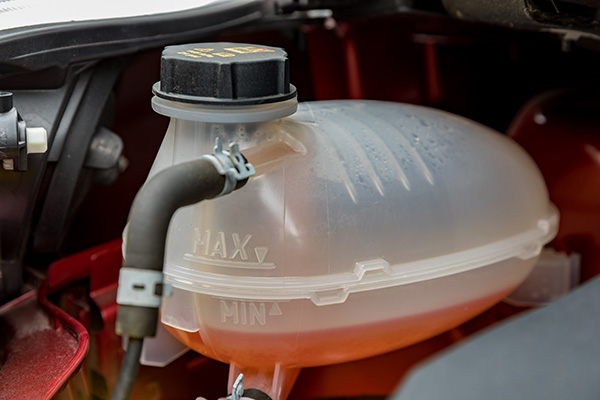
Low coolant is one of those problems people talk themselves into postponing. The car still starts, still moves, and may not even look like it is running hot at first, so it feels easier to keep driving and deal with it later. That is usually how a manageable cooling system repair turns into a much bigger engine problem.
Coolant loss is never something the engine just shrugs off.
Why Low Coolant Gets Serious So Fast
Your cooling system is designed to remove heat from the engine and keep operating temperatures under control in traffic, on the highway, and during hot weather. Once the coolant level drops, that safety cushion gets smaller right away. The system may still function for a while, but it has far less room for error.
That is why a car with low coolant can seem normal on one trip and start running hotter on the next. A little more traffic, a warmer day, or a longer drive can be enough to push it past the point where the system can keep up.
What Low Coolant Does Inside The Engine
When coolant is low, heat does not move through the engine the way it should. Instead of circulating evenly, the system starts developing hot spots in places that are supposed to stay under control. That extra heat puts stress on gaskets, seals, hoses, and metal engine parts much faster than most drivers realize.
The cylinder head is usually one of the first places to suffer. If temperatures climb too far, the head can warp, sealing surfaces can distort, and the head gasket can begin to fail. At that point, the repair is no longer just about coolant loss. It becomes an engine repair.
The Early Warnings Drivers Miss
Low coolant usually gives a few clues before the car fully overheats. The problem is that they often seem small enough to ignore.
Common warning signs include:
- The temperature gauge starts climbing higher than usual
- The heater blows warm, then cooler, then warm again
- A sweet smell shows up after driving
- The coolant reservoir keeps dropping between checks
None of those signs should be treated as minor quirks. They usually mean the cooling system is already under stress and losing the consistency it needs.
Why Topping It Off Is Not A Real Fix
Adding coolant back into the system may quiet the warning for a little while, but it does not solve the reason the coolant went low in the first place. Coolant does not get used up like fuel. If it is missing, there is usually a leak, a weak cap, a hose problem, a water pump issue, or pressure loss somewhere in the system.
This is where drivers lose the most money. They top it off, keep driving, and assume the problem is under control because the gauge looks normal again. Meanwhile, the leak keeps growing, the system keeps weakening, and the engine keeps overheating beyond its design limits.
What Parts Can Be Damaged If You Keep Going
A low coolant condition can affect much more than one hose or one gasket. The entire cooling system starts working harder, and once that happens, wear spreads quickly. The thermostat, radiator, water pump, heater core, hoses, and pressure cap can all be stressed by low coolant and poor circulation.
Then the larger damage begins. Head gasket failure, warped cylinder heads, and internal overheating damage are exactly the outcomes drivers are trying to avoid. That is why a cooling system issue is much cheaper at the leak stage than it is at the engine stage.
When You Should Stop Driving
There is a difference between noticing a low reservoir once and continuing to drive a car that is actively warning you it is running hot. If the temperature gauge is climbing, steam is coming from under the hood, or the heater suddenly stops working as it should, it is time to stop and have the vehicle checked. Driving farther at that point is a gamble with the engine.
Even if the car has not fully overheated yet, repeated coolant loss deserves an inspection as soon as possible. The longer the system stays low, the more likely it is that the next trip will be the one that pushes it too far.
Why Early Repair Usually Saves A Lot Of Money
Cooling system problems are usually easiest to fix when they are still small. A hose, reservoir, thermostat housing, cap, or water pump issue is frustrating, but it is still far better than dealing with the damage that follows repeated overheating. That is why regular maintenance is so important here. It gives problems a chance to be found before the engine starts paying for them.
A good cooling system inspection should check for leaks, pressure loss, weak components, and signs that the engine has already been running hotter than it should. That kind of inspection is what keeps a small coolant problem from turning into the repair everybody wishes they had avoided.
Get Cooling System Repair In Atlantic City, NJ, With Sunny Service Center
If your coolant level keeps dropping or your car has started running hotter than normal, Sunny Service Center in Atlantic City, NJ, can find the cause and fix it before the problem becomes engine damage.
Bring it in early and let the cooling system be corrected before a small leak becomes a much bigger repair.